Before you start
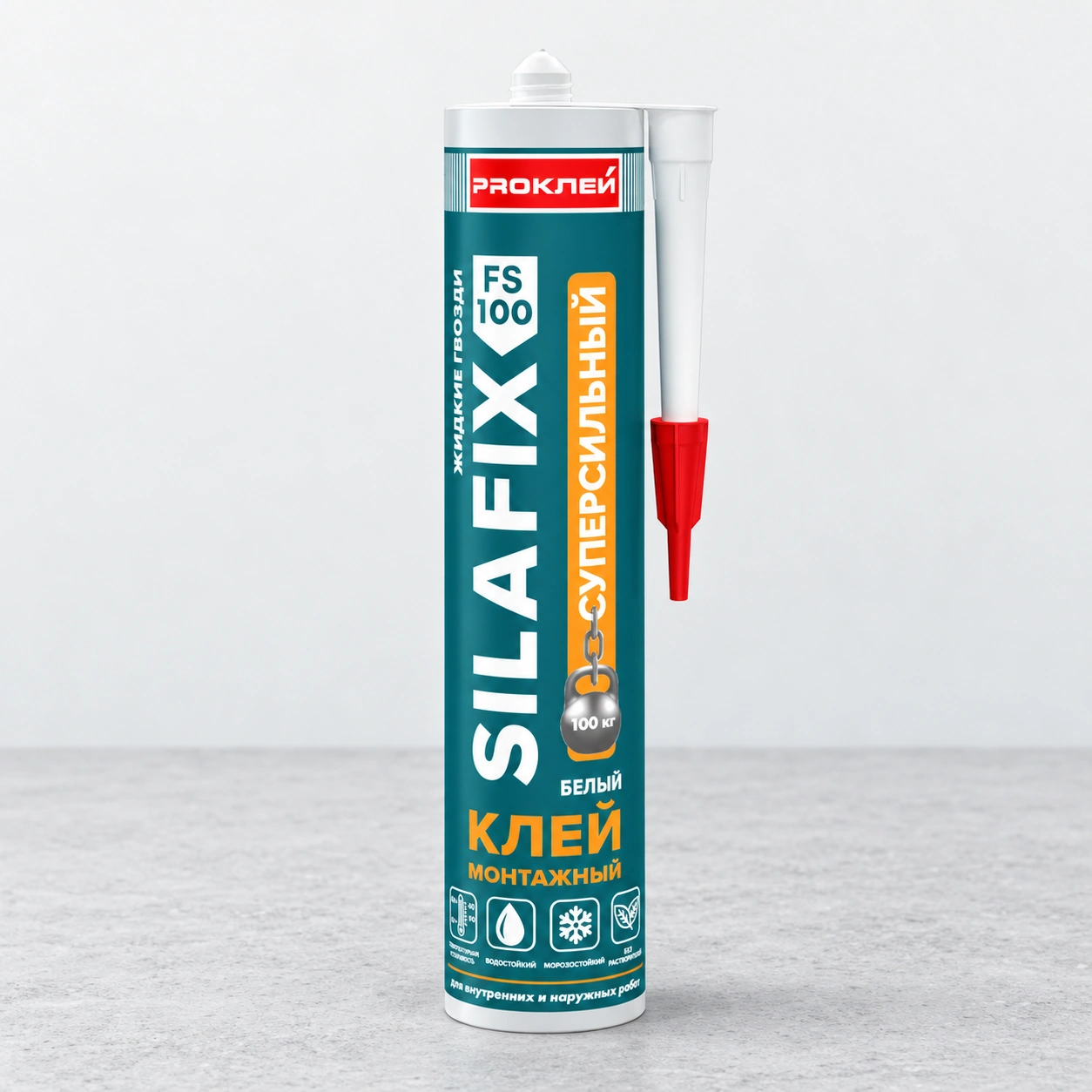
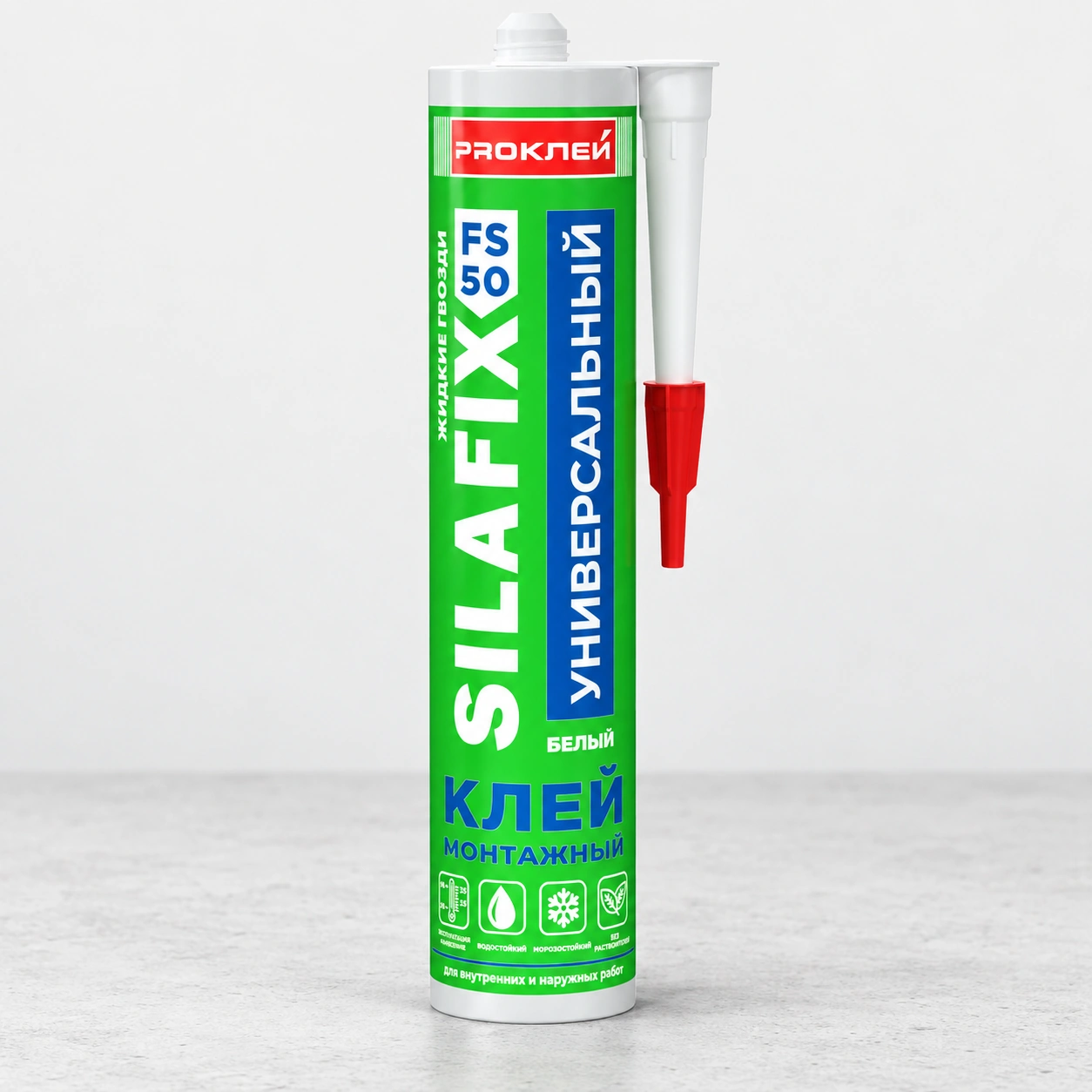
The first question is what the panel is made of and what it goes onto. PVC, MDF, chipboard and gypsum are fixed to plasterboard, plaster, brick and concrete with the acrylic SilaFix FS-50 and FS-100: water-based, solvent-free, with an elastic paintable joint. For dense and heavy panels take FS-100 — 100 kg/m², twice the basic FS-50.
The second question is moisture. If the panels go into a bathroom or a kitchen next to the sink, an acrylic joint must not be in permanent contact with water. That is where the MS polymer FS-300 works: made for wet rooms, it bonds damp materials and holds 300 kg/m².
Procedure
Clean the substrate, remove dust and prime if needed; wipe the back of the panel. Apply the adhesive not as a continuous layer but in strips or a zigzag at 10–15 cm spacing and around the perimeter — the panel will sit flat and no excess will squeeze into the joints. A 6 mm bead from one cartridge covers 14 metres.
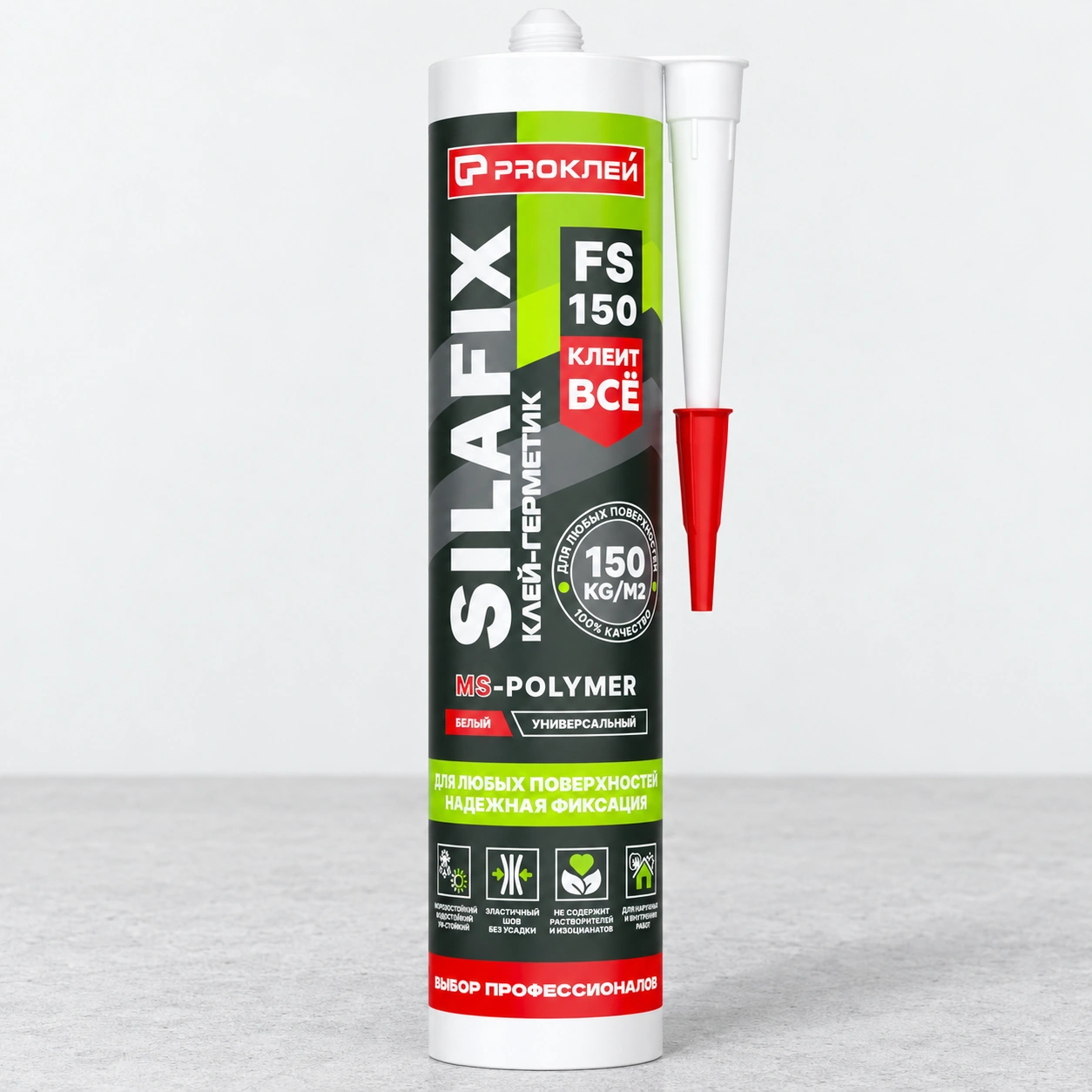
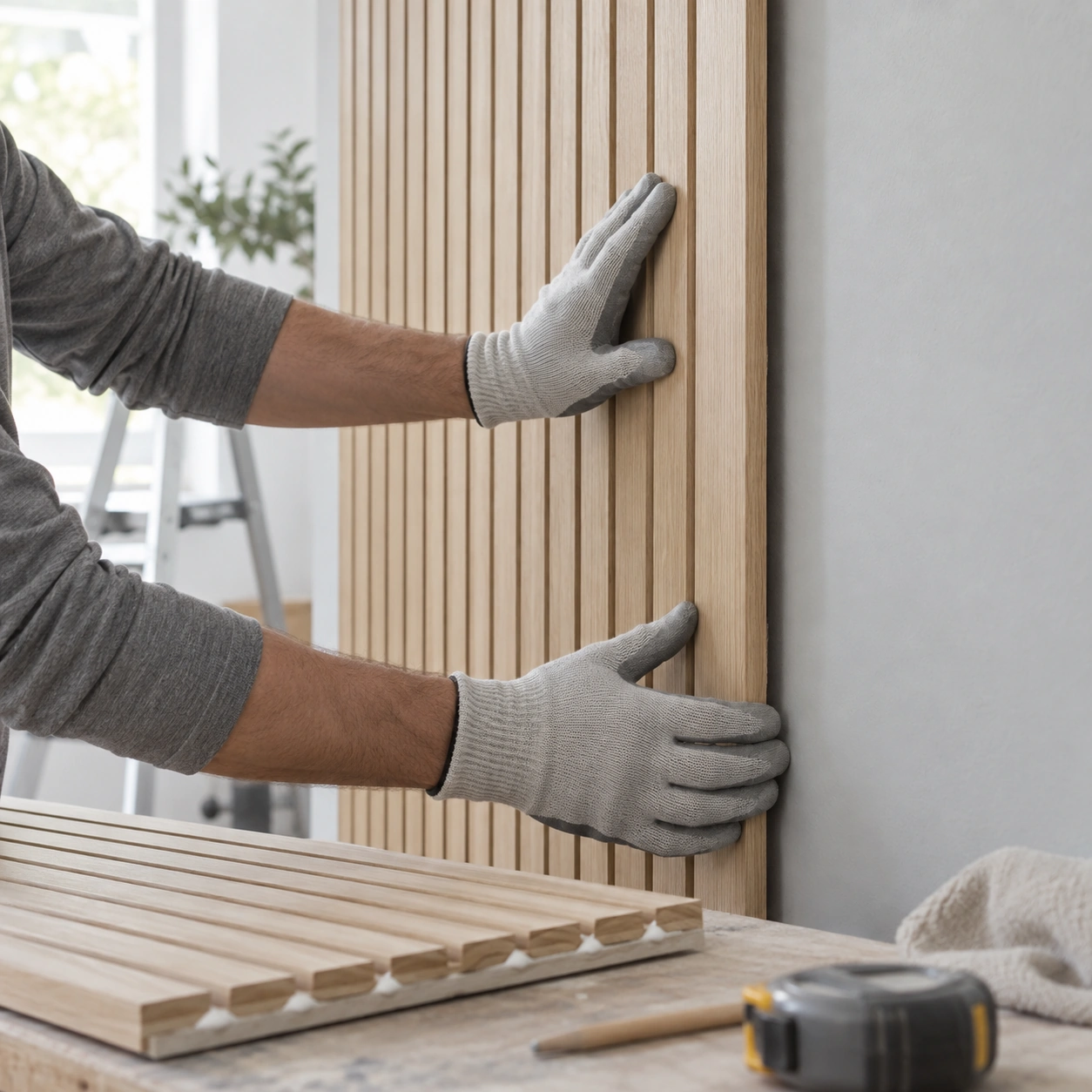
Place the panel within 10 minutes of application, press for 4–5 seconds and check with a level. With FS-150 and FS-300 the position can be corrected for 30 minutes; with acrylics only right away.
What to watch for
Support large panels or hold them with masking tape for a day. Do not glue onto wallpaper or chalk whitewash. Leave an expansion gap between panels if the material changes size with humidity — MDF and wood.
After mounting, fill the joints and abutments to the floor and ceiling with the acrylic sealant: it takes paint and prevents mould in wet areas.
Check the product instructions
Application conditions depend on the chosen product.